Content Atomization vs Video Clipping: The Smart Strategy to Repurpose Long-Form Video
Picture this: your latest long-form video interview with a SaaS founder clocks in at 45 minutes. It packs insights on customer acquisition, team scaling, and product pivots. You face a choice. Do you slice it into quick clips for social feeds, or do you transform each core idea into standalone assets tailored for different channels and audiences?
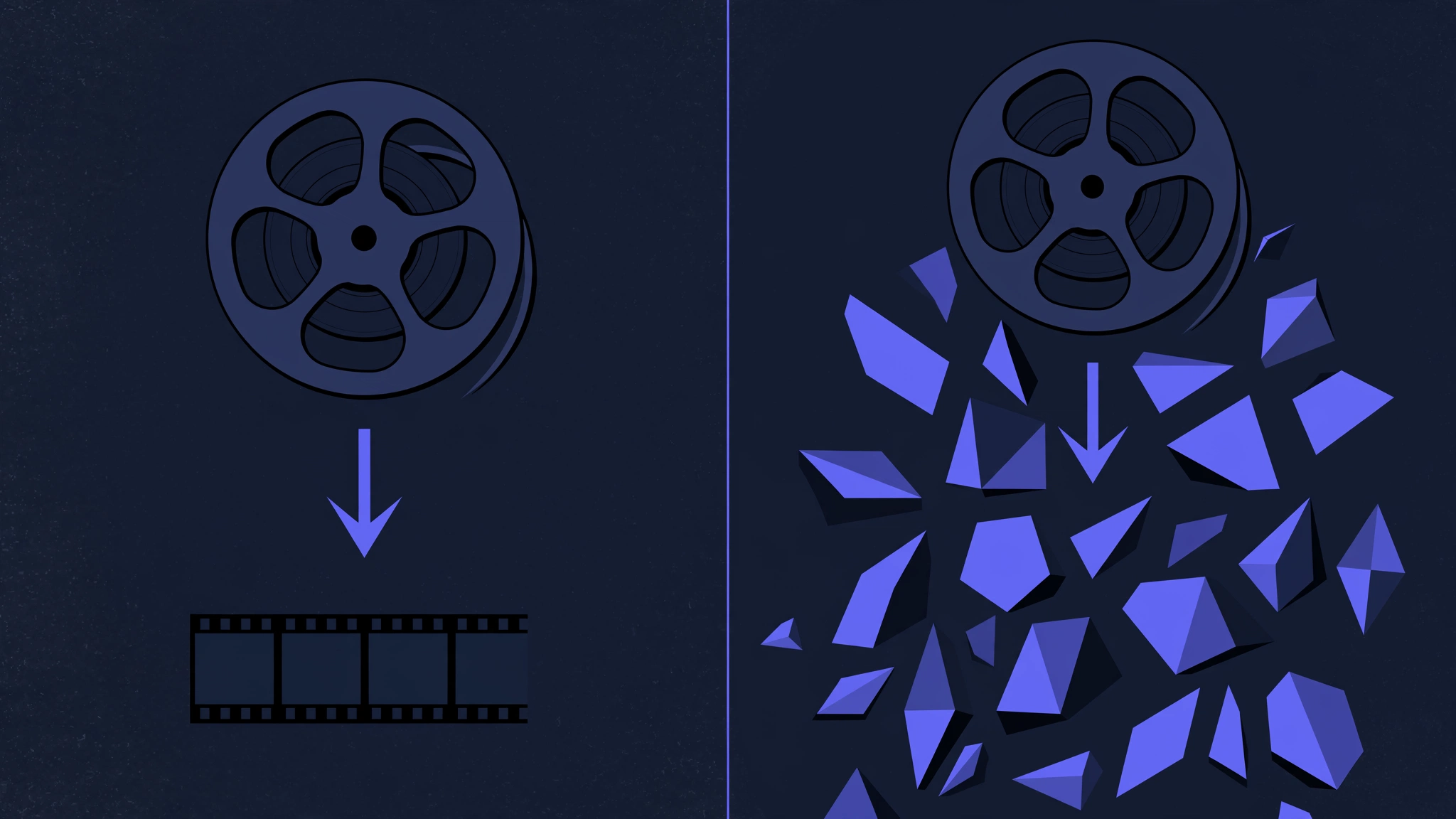
Video clipping takes that one video and shortens segments with minimal changes. simple cuts preserve the original flow. Content atomization breaks it down further. It extracts distinct ideas and rebuilds each with fresh hooks, pacing, and visuals. Founders and content leads should choose clipping for quick wins like highlight reels. Opt for atomization when aiming to dominate multiple channels and buyer journeys.
Content Factory AI enters here. Its tools help scale this process. Ready to explore which fits your strategy? This guide lays it out step by step.
Direct Answer: Clip for Speed, Atomize for Scale
The decision hinges on your goals. If time crunches demand fast social posts, clipping delivers. It repurposes long-form video into bite-sized pieces in hours. Atomization suits ambitious content factories. It turns one video into a fleet of original pieces, each optimized for specific platforms and stages.
Clipping shines in scenarios like event recaps or viral moments. Atomization unlocks true leverage. Think of it as cloning your video's value across ecosystems. For founders building content engines, atomization compounds reach without diluting voice.
Defining Video Clipping vs Content Atomization
What Is Video Clipping?
Video clipping starts with your source material. You identify strong moments. A laugh line. A bold prediction. Then trim around them. The result? Shorts that mirror the original edit. Same opening music. Similar cuts. Viewers recognize the parent video instantly.
Tools make this straightforward. Export a 60-second segment from a podcast. Add captions. Post to TikTok or Reels. Clipping repurposes long-form video efficiently for awareness plays.
What Is Content Atomization?
Content atomization goes deeper. It dissects the video into atomic ideas. Each idea stands alone. You rebuild it with a new hook. Adjust pacing for the platform. Apply fresh visuals. The output feels native, not extracted.
Consider a discussion on growth hacking. Clipping grabs a tactic quote. Atomization crafts a full tutorial video from that tactic. Another piece becomes a myth-busting short. A third evolves into a carousel post. This content atomization strategy multiplies impact.
In video clipping vs atomization, clipping recycles. Atomization reinvents.
When Video Clipping Is the Right Tool
Clipping fits tight timelines. Your team records a webinar. Deadlines loom for promotion. Grab the top three quotes. Each becomes a 15-second clip. Post across LinkedIn and Instagram. Drive traffic back to the full replay.
Ideal use cases include:
- Highlight reels from keynotes or interviews. Capture energy without full context.
- Recaps of live events. Quick hits remind attendees and lure newcomers.
- Time-boxed quotes for newsletters or stories. Punchy soundbites build buzz.
Clipping keeps production light. One editor handles ten clips from an hour-long talk. Costs stay low. Speed wins engagement on fast-scroll feeds.
When Content Atomization Takes Over
Scale calls for atomization. Your long-form video covers buyer stages. Awareness tips for top-of-funnel. Objection handlers for mid-funnel. Case studies for bottom. Clips repeat the same hook. Atomized pieces target each stage precisely.
Spot these signals:
- Multi-channel publishing plans. YouTube Shorts, LinkedIn carousels, Twitter threads, email series.
- Multiple buyer stages in one source. Tailor angles to nurture leads.
- Distinct audience questions packed inside. Founders want frameworks. Managers seek tactics.
Atomization turns one asset into ten originals. It fuels a content atomization strategy that owns search and social. Repurpose long-form video into a content ecosystem.
Clipping vs Atomization: Side-by-Side Comparison
| Aspect | Video Clipping | Content Atomization |
|---|---|---|
| Opening | Same as source (music, intro clip) | Fresh hook tailored to idea/platform |
| Pacing | Compressed original rhythm | Optimized for new format/audience |
| Treatment | Minimal edits, same visuals | New graphics, B-roll, animations |
| Review | Quick fact-check on clip | Full rewrite validation per atom |
| Business Outcome | Tactical reach boost | Strategic channel dominance |
Video clipping vs atomization reveals clear trade-offs. Clipping prioritizes speed. Atomization builds empires.
Decision Tree: Your If-Then Path to Choose
Follow this tree to decide. Start at the top.
- Do you need content in 24 hours? Yes: Clip. No: Proceed.
- Single channel focus? Yes: Clip highlights. No: Proceed.
- One-time promo? Yes: Clip recaps. No: Proceed.
- Multiple audiences/stages? Yes: Atomize. No: Clip anyway for efficiency.
- Resources for custom edits? Yes: Atomize fully. Limited: Hybrid approach.
This path ensures your repurpose long-form video efforts align with reality. Test small. Scale winners.
Preserving Your Original Point of View in Atomization
Atomization risks drift. Core messages blur across formats. Counter this with anchors.
First, script from transcripts. Pull verbatim key phrases. Build around them. Second, use consistent branding. Voiceover tone. Color palette. Third, cross-reference atoms to source. Does this advance the big idea?
Example: Source video pushes "customer-first growth." Every atom echoes it. A short frames a tactic through that lens. A deep dive unpacks it. Voice stays intact. Authority endures.
Atomization amplifies voice. It does not fracture it.
How Content Factory AI's Creative Lens Powers Atomization
Manual atomization drains teams. Enter Content Factory AI. Its Creative Lens reimagines source videos. One upload yields originals. New hooks draw viewers. Pacing fits platforms. Visuals refresh without rework.
No cookie-cutter clips. Each atom serves as an entry point. Founders repurpose long-form video at scale. Content leads focus on strategy, not edits.
Book a demo today. See the Creative Lens transform your content. Or dive deeper at the Content Factory AI blog.
Checklist for Content Leads: Audit Your Approach
- Inventory source videos. Note ideas per minute.
- Map channels and audiences.
- Estimate clip volume vs atom potential.
- Budget time: Clips (1 hour/video), Atoms (4+ hours).
- Test one video both ways. Measure engagement.
- Track attribution: Do atoms drive unique traffic?
- Scale with tools like Content Factory AI.
Run this weekly. Refine your content atomization engine.
FAQ: Content Atomization Essentials
What is the main difference in video clipping vs atomization?
Clipping shortens segments from the original. Atomization extracts ideas and recreates them as independent pieces with new elements.
How do I start a content atomization strategy?
Transcribe videos. Identify 5-10 atoms. Assign hooks per channel. Produce and distribute systematically.
Can I combine clipping and atomization?
Yes. Use clips for immediate buzz. Follow with atoms for depth and longevity.
Does atomization require big teams?
Not anymore. Tools like Content Factory AI automate Creative Lens outputs. Solo leads manage pipelines.
How does atomization improve ROI on long-form video?
One video seeds dozens of assets. Hits more queries. Nurtures across funnels. Compounds organic growth.
Conclusion: Build Your Content Atomization Edge
Clipping fuels sprints. Atomization wins marathons. Founders and content leads who master both own their niches. One video becomes your media company.
Content Factory AI accelerates this. Its Creative Lens crafts originals from your sources. Book a demo. Explore more strategies at cfactoryai.com/blog.
Start atomizing. Watch your influence expand.